
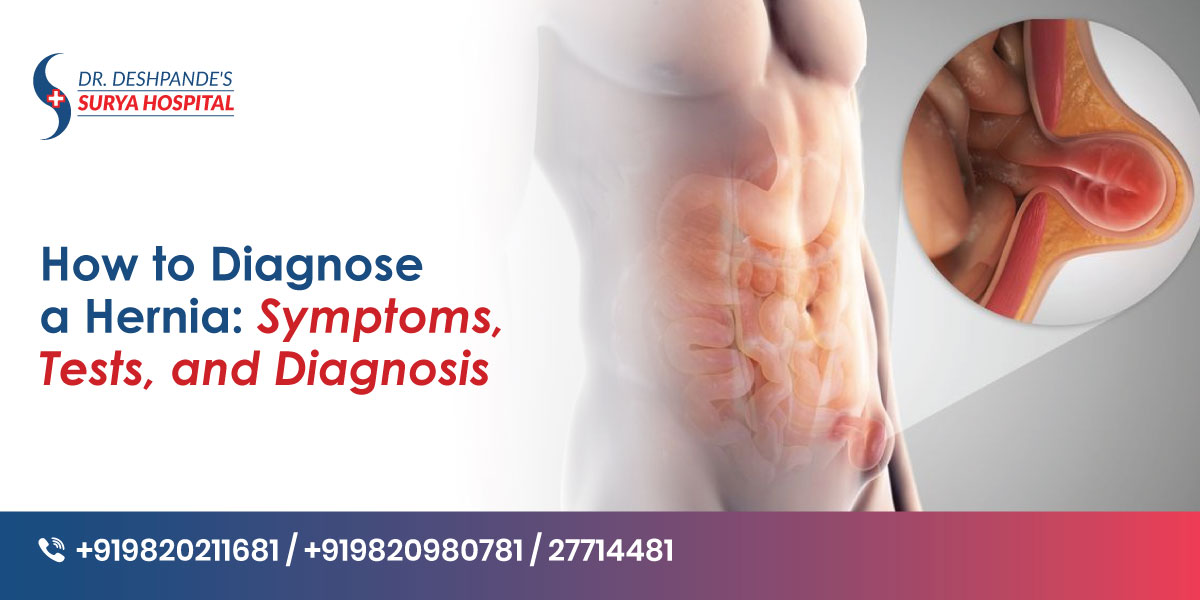
Do you notice an unusual lump in your abdomen, groin, or near your belly button that often pops up when you are lifting something heavy, coughing, or doing physical activities that put stress on the affected area? This could be a hernia.
It occurs when an organ or tissue pushes through the weak abdominal wall, creating a visible bulge that becomes more pronounced during physical activities. The question is, how can you know if it’s a hernia? A hernia specialist in Navi Mumbai may ask about your symptoms, check the affected area for a lump, and may order imaging for a proper diagnosis.
Hernia Symptoms
Your doctor will start the diagnosis with your medical history and symptom details. The symptoms can vary significantly between two people with a hernia.
Some may have a bulge while others experience discomfort and a dragging sensation without an obvious bulge. Here are the common signs:
- A soft lump that can be felt under the skin
- A heaviness or pressure-like sensation
- A dull ache or sharp pain
- A burning sensation
- The bulge becoming larger and easier to notice during movement and getting pushed back as you lie down
Seek immediate hernia treatment in Navi Mumbai if you experience a discolored hernia, a tightened lump, or difficulty pushing it back in, with abdominal swelling, fever, and severe pain. These are all signs of a strangulated hernia.
Physical Examination
In most cases, physical examination is enough to diagnose a hernia. The doctor may check the affected area for swelling or tenderness. They may also ask you to move and lie down to check how the bulge changes, or they may ask you to cough so that the bulge can be more noticeable.
Ultrasound
An ultrasound is a harmless and painless procedure that’s used as an imaging test to examine the internal organs and tissues. It can detect inguinal, umbilical, and abdominal hernia, especially when the bulge is small enough to not be clearly visible or detectable through physical examination.
It’s a simple procedure. The doctor will apply gel to the abdomen and run the transducer across your skin. The images of your internal organs appear on the monitor.
CT Scan or MRI
When the above tests do not give a clear picture, a CT scan or an MRI may be used to generate a more detailed picture of the hernia. These aren’t routinely used for hernia diagnosis, but can be considered if the lump is too small or not visible through other tests.
Complications of Untreated Hernia
If a hernia isn’t diagnosed or treated, it can continue to grow bigger, thus causing more discomfort, especially when you cough, move, or put physical stress on your body.
The hernia can become incarcerated, i.e., it may get stuck outside the abdominal wall and won’t flatten even when you are resting. This further increases the risk of strangulation, where blood supply to the hernia is cut off, and the tissue trapped inside dies.