
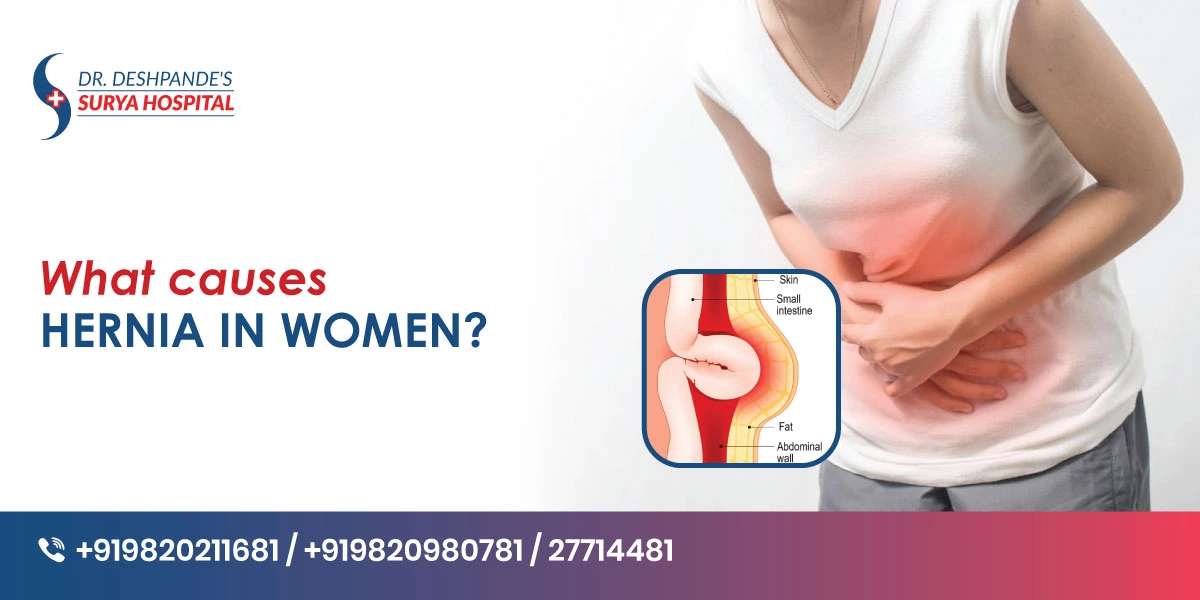
A hernia occurs when fatty tissue or part of the intestine pushes through a weak area in your muscles. People usually see heavy lifting as a common culprit, but in women, many factors can contribute to a hernia.
Sometimes, the cause of a hernia is as simple as abdominal weakness or chronic constipation, while others may develop it during pregnancy or due to a previous abdominal surgery.
A hernia can’t disappear on its own and can’t be treated with medication. That’s why hernia treatment in Navi Mumbai is mostly a surgical repair, where the hernia is pushed back into place, the abdominal walls are closed, and reinforced with a mesh.
Common Causes of Hernia in Women
A weak spot, as well as pressure inside your abdomen, can result in the tissues protruding through the abdominal wall, requiring treatment from a hernia surgeon in Navi Mumbai. Let’s take a look at the common causes of hernia in women.
Pregnancy
In the later months of your pregnancy, the uterus stretches significantly, which can sometimes weaken abdominal tissue. The increasing pressure on the abdominal wall from the growing baby, combined with activities that put additional pressure on the abdomen, can lead to a hernia.
Pregnancy is linked to abdominal and groin hernias. That said, not every pregnant woman develops a hernia. The risk is higher in those with an existing weakness in the abdominal wall.
Previous Abdominal Surgery
A hernia lump around the incision site on the abdomen can occur after surgery. That’s because the abdominal wall is opened up and stitched back together, which might weaken the tissue.
If you have had a C-section delivery or other major pelvic or abdominal surgeries, you may be at an increased risk of incisional hernia. Excessive pressure around the incision can push the tissue through the abdominal wall.
Chronic Constipation
Women with chronic constipation or straining frequently when passing bowel movements are more susceptible to hernia formation or enlargement of the existing hernia. Constant straining puts too much pressure on your abdomen.
Likewise, other activities that strain your already-weakened abdominal wall can increase your risk of developing a hernia. Note that the issue isn’t a single episode of constipation, but repeated straining.
Persistent Coughing and Heavy Lifting
Coughing is another factor that may contribute to hernia formation. It’s associated with inguinal or abdominal hernia. Constant coughing puts pressure on the abdomen, which in turn can lead to the fatty tissues pushing through the abdominal wall and creating a noticeable bulge outside. The same applies to heavy lifting. However, heavy lifting cannot cause a hernia.
There’s almost always an underlying weakness, which occurs due to a previous abdominal surgery, pregnancy, or chronic constipation. Regular heavy lifting can thus create a hernia or make an existing one more prominent.
Age
The tissue that makes up the abdominal wall becomes weaker with age. This, combined with a surgical history, constipation, and persistent coughing, can make you more susceptible to a hernia. That said, not every older woman develops a hernia.