
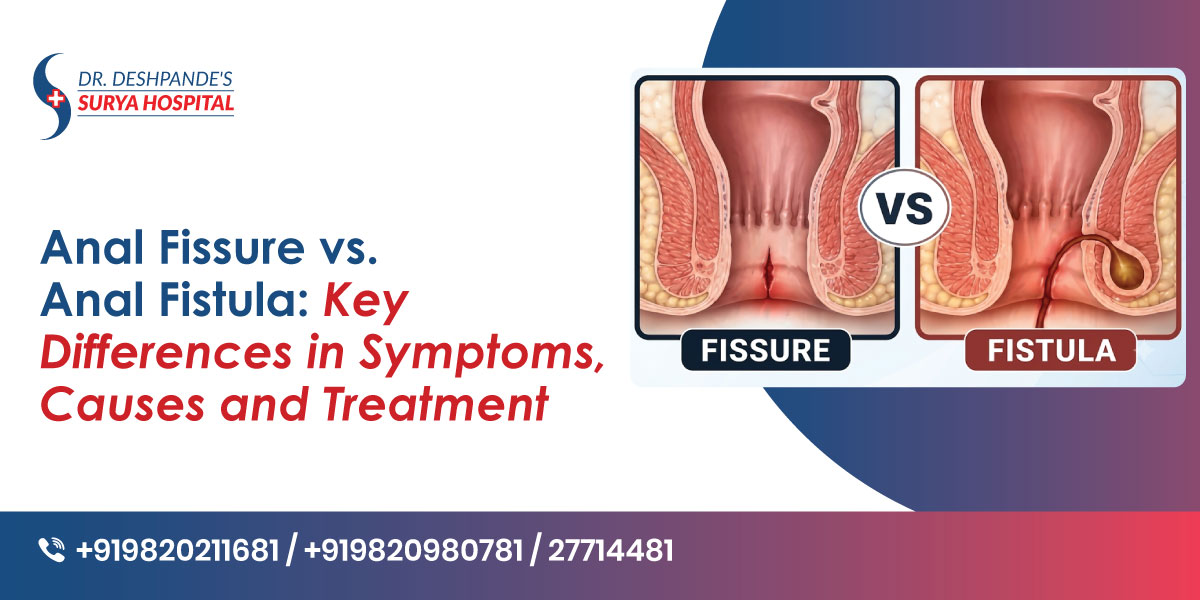
Are you experiencing a sharp, burning pain when passing bowel movements, along with rectal bleeding and swelling? The two common causes are anal fissure and anal fistula. The names may sound similar, but the conditions are completely different, with varying symptoms, causes, and treatment options.
Anal fissure is a small cut in your anal canal, while a fistula is a more complex tunnel that forms between the rectum and the skin around your anus. The latter almost always requires a visit to a general surgeon in Navi Mumbai.
What is Anal Fissure?
An anal fissure is when the lining of your anal canal becomes overstretched or is torn from constant pressure due to straining or constipation. This can cause intense pain when passing bowel movements or pain that may persist for several minutes to hours after using the toilet.
Some also notice blood on the toilet paper. Fissure can be acute, i.e. it may last up to six weeks and usually respond well to conservative treatments. Chronic fissure is when the tear is persistent and might result in scar tissue or a skin tag, which could require further treatment.
Anyone can develop an anal fissure, but those with repeated constipation, diarrhea, and straining during bowel movements are at a higher risk.
What is an Anal Fistula?
Anal fistula occurs when one of the glands in your anal canal becomes infected and forms a pocket of pus. An abscess might drain either automatically or with treatment. While the infection itself may resolve, it can leave behind a tunnel that connects the inside of the anal canal with the skin surrounding it. This abnormal passage is called an anal fistula.
People with an anal fistula may experience:
- Recurring discharge from a hole in the skin around your anus
- Itchiness around the affected area
- Swelling accompanied by intense pain
- Foul-smelling discharge
- Fever, chills, and increased pain (if infection develops)
While the infection may heal with antibiotics, the tunnel cannot heal on its own and often requires surgical treatment.
Causes of Anal Fistula and Fissure
Fistula
Anal fistulas usually develop when there’s an infection in the gland inside the anal canal. Other risk factors include Crohn’s disease, tuberculosis, previous anal surgery, injuries, trauma, and other infections.
Fissure
Anal fissure, on the other hand, occurs when the sensitive lining of the anal canal becomes irritated or stretched because of excessive pressure. This happens when repeated straining and passing hard and bulky stools tear the delicate anal canal lining. The same happens when you have repeated diarrhea. Sometimes, vaginal delivery can tear this lining.
The fissures can become chronic in people with excessively tight sphincter muscles. These are responsible for opening and closing your anus. Too tight muscles can reduce blood flow to the injured area, thus delaying healing.
Treatment for Anal Fistula and Fissure
Fistula Treatment
Surgery is needed to remove the abnormal passage and prevent infections. Here’s what may be advised:
- Fistulotomy
- Seton placement
- LIFT procedure
- Fibrin glue
Fissure Treatment
Fissure treatment in Navi Mumbai focuses on speeding up tissue healing while reducing pain and preventing constipation. Here’s what may work:
- Dietary changes
- Stool softeners
- Warm sitz baths
- Topical medications
- Botox injections
- Lateral internal sphincterotomy