
Cholecystectomy, a surgery that removes your gallbladder, is considered an effective, long-term gallstone treatment in Navi Mumbai. But does everyone need surgery for these hard deposits found in the gallbladder? Not necessarily. It depends on the symptoms, severity, and the risk of the stone blocking the bile duct. There are many such concerns people have regarding gallstones. To clear your doubts, we’ve listed the 10 most commonly asked questions and their answers by experts.
1. What exactly is a Gallstone?
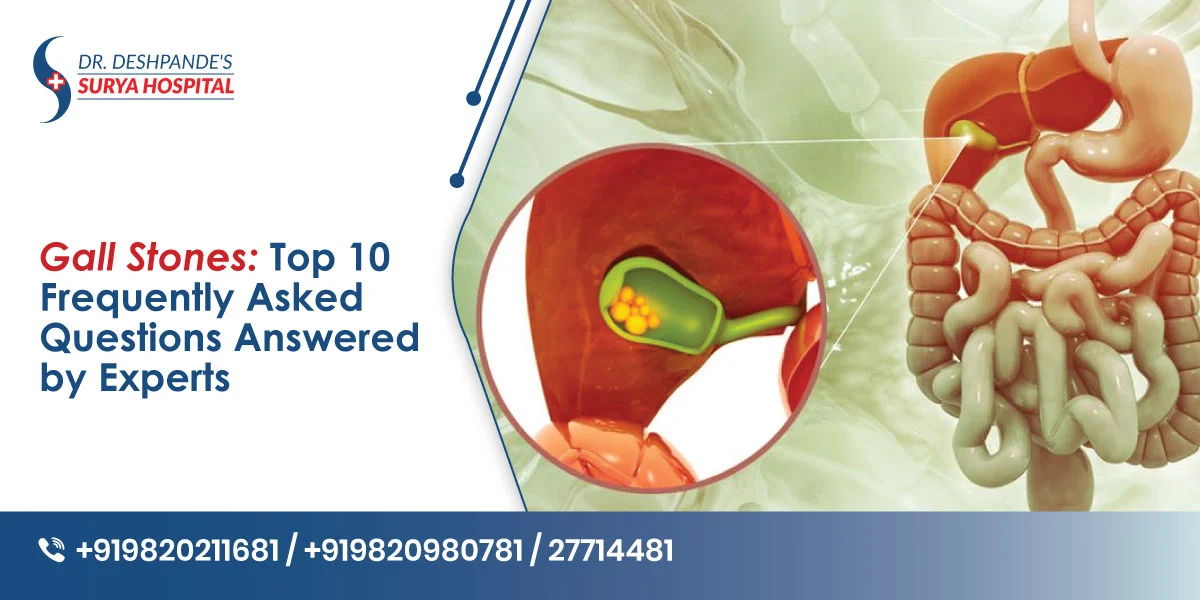
Gallstones are hard, pebble-like growths in your gallbladder — the organ located beneath the liver, responsible for storing bile. Normally, bile is released into the small intestines, where it helps in digestion and absorption of fats. Gallstones develop when the substances that make up bile become highly concentrated, turning into crystals, which eventually become gallstones.
2. What Causes Gallstones?
Overweight, pregnancy, losing too much weight too fast, advancing age, certain medicines, or incomplete emptying of the gallbladder are the common risk factors. A diet low in fiber and rich in unhealthy fats can also contribute to the risk.
3. Can Gallstones Disappear?
Certain cholesterol gallstones can dissolve with medication, but it’s not guaranteed and may take months to years. Mostly, gallstones do not dissolve on their own.
4. What are the Symptoms of Gallstones?
Common symptoms include:
- Pain in the upper abdomen
- Nausea or vomiting
- Pain triggered by fatty, heavy meals
Severe symptoms, such as jaundice, might develop if the stones block your bile duct.
5. When do Gallstones Require Surgery?
Gallbladder removal isn’t necessary if you have asymptomatic gallstones that are incidentally caught on routine tests. Surgery is needed when you have repeated episodes of biliary colic or are at an increased risk of gallstone complications, such as acute cholecystitis.
6. Does Gallbladder Removal Affect Quality of Life?
No. Gallbladder removal doesn’t affect your normal life. It is an organ responsible for storing, not producing, bile. Once removed, the bile flows from the liver to the intestines.
7. How are Gallstones Diagnosed?
Abdominal ultrasound is a common test used for detecting gallstones. Blood tests may be recommended if a gallstone specialist in Navi Mumbai suspects inflammation, infection, or other liver-related concerns.
8. Can Increasing Your Fluid Intake Flush Gallstones?
Unfortunately, gallstones can’t leave your body if you increase your fluid intake. These aren’t the kidney stones that could pass through urine. If stones are causing symptoms, medical intervention is the best step.
9. Can Gallstones Cause Complications if Not Removed?
Yes, it can cause complications, especially if the stone gets trapped in the bile duct. It can cause cholecystitis, bacterial infection of the bile duct, and in severe cases, gallbladder perforation.
10. When Should I Seek Prompt Medical Attention for Gallstones?
See a healthcare specialist immediately if you experience severe, persistent upper abdominal pain, particularly if it occurs with nausea, vomiting, and fever. Fever and chills are signs of an infection, while jaundice (yellowing of the skin and eyes) could indicate a stone blocking the bile duct.