

Have you ever felt a small lump in the lower abdominal area? An inguinal hernia in men develops when the contents of the abdomen push through the weak layer of the muscles. This mainly includes intestines. When that happens, a bulge develops. This can cause extreme pain when you cough, bend, or lift heavy things. These are called inguinal hernias.
Although they aren’t dangerous, hernias do not tend to heal on their own. If they keep getting bigger or are painful, you may need to consider hernia treatment in Navi Mumbai for relief. Let’s see what makes laparoscopic hernia surgery an effective treatment option.
Causes and Symptoms of Inguinal Hernia
Inguinal hernias occur due to a weak spot in the abdominal wall. This weakness could be present from birth or develop later in life. Some factors that increase your risk of developing inguinal hernias include:
- Lifting heavy objects frequently
- Coughing or sneezing a lot
- A history of abdominal surgery
- An accident
- Pregnancy
- Excessive straining when passing stools or urinating
Symptoms
- A visible lump on your pubic bone (either side), which looks more pronounced during straining
- Painful lump
- Swelling around the testicles
Overview of Laparoscopic Inguinal Hernia Surgery
A minimally invasive surgical procedure can help push the protruding tissues back into their place and reinforce the abdominal wall using a mesh. It’s called laparoscopic inguinal hernia repair surgery.
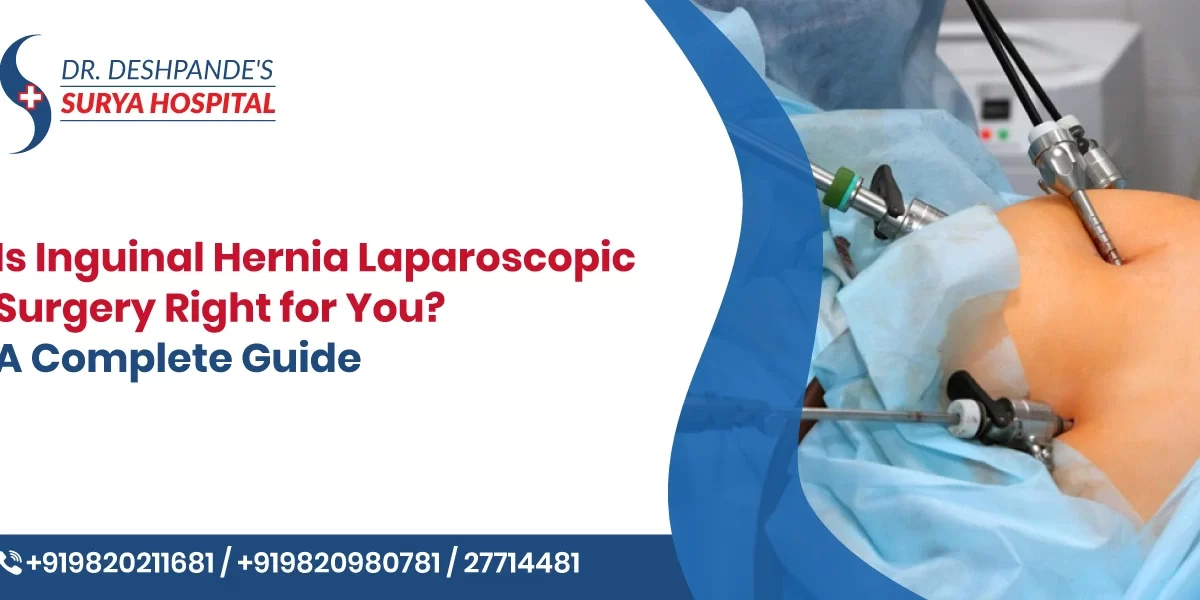
A general surgeon in Navi Mumbai fills your abdomen with gas to get a clear view of the internal organs. They make a tiny cut through which a laparoscope is inserted into the abdomen. Through other tiny cuts, advanced instruments that are used for hernia repair are inserted.
Benefits of Laparoscopic Inguinal Hernia Repair
Laparoscopic surgery causes less post-surgical discomfort and is a comparatively safer and less invasive alternative to open hernia repair. Here’s why healthcare professionals recommend this technique for inguinal hernia.
- Small Scar: Laparoscopic surgery involves multiple smaller incisions, which not only offer cosmetic benefits but also cause significantly less scarring.
- Less Pain: Less scarring means less pain and discomfort after surgery.
- Faster Recovery: You will be in the observation room until the anesthesia wears off. You can go back home in 2-3 days. Generally, with laparoscopic surgery, the recovery period is shorter and more comfortable compared to open surgery.
- Low Risk of Complications: Smaller incisions lead to less blood loss and fewer post-surgical risks.
Besides the obvious benefits, laparoscopic hernia repair is mainly recommended for patients with bilateral hernia (on both sides of the pubic bone) as well as for recurrent cases.
Am I a Good Candidate for Laparoscopic Inguinal Hernia Repair?
Laparoscopic hernia repair surgery is considered an effective treatment approach. However, not every patient might be the best candidate for the surgery. Your surgeon will assess your health, medical history, and the type or size of hernia before recommending surgery. Your best bet is to consult a surgeon and weigh the risks and advantages before making a decision.