

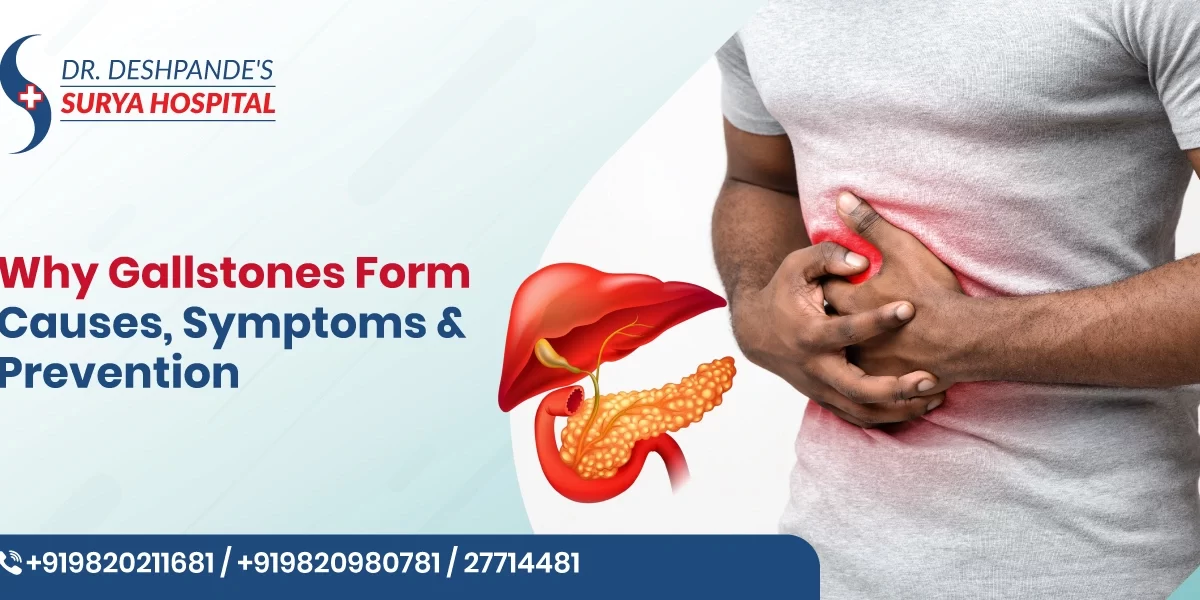
The gallbladder is a small, pear-shaped organ sitting right beneath your liver. It stores bile, a component that helps digest fat. When you have had a fatty meal, the gallbladder releases the bile into your small intestine for smooth digestion. Too much cholesterol or bilirubin in the bile are the common cause of gallstones.
You may need gallstone treatment in Navi Mumbai if you experience abdominal pain with nausea, vomiting, bloating, gas, and indigestion. The question is, what causes gallstones? Are they preventable? Let’s find out.
Causes of Gallstones
Here are the common causes of gallstones.
1. Excessive Cholesterol
Bile contains cholesterol, bile salts, and other substances. They are present in balanced amounts. However, too much cholesterol in the bile doesn’t get dissolved properly and starts crystallizing. When your liver continues to release more cholesterol than your bile can handle, the crystals continue to form and might stick together, turning into gallstones.
So, what causes a high amount of cholesterol in bile? A few common conditions linked to excess cholesterol in bile include diabetes, obesity, high-fat diets, and hormonal changes.
2. Excessive Bilirubin
Your body releases bilirubin, a yellow pigment, which is released when your red blood cells break down. Bilirubin goes to the liver and is excreted into bile, and is finally released from your body through the stools.
When your body produces more bilirubin than the bile can handle, it starts forming tiny crystals. Liver cirrhosis, infection of the bile duct, and blood disorders are linked to too much bilirubin production.
3. Inefficient Gallbladder Emptying
The bile stored in your gallbladder is released after meals, especially after fatty meals. When your gallbladder doesn’t empty properly, or bile stays there for a prolonged period, it can thicken and become concentrated. As a result, the small substances in the bile can stick together to form gallbladder stones. Common causes include drastic weight loss, pregnancy, prolonged fasting, and severe illness.
Symptoms of Gallstones
So, how do you know if you have gallstones? Many people have silent gallstones, i.e., they don’t experience any symptoms at all. It’s only when these stones block your bile duct that the symptoms start showing up. Here’s what patients experience:
- Sharp pain in the upper abdomen
- Pain traveling to the back or right shoulder
- Bloating or indigestion, especially after having a fatty meal
- Nausea and vomiting
If it progresses into an infection or inflammation, more serious symptoms can occur. This includes fever, jaundice, and persistent pain.
Can You Prevent Gallstones?
Some lifestyle choices can mitigate your risk of developing gallstones in the first place, but before you go ahead, note that not all types of gallstones can be prevented.
- Maintain a healthy Weight: Obesity increases cholesterol in bile. Avoid losing too much weight too quickly, as that also increases the risk of gallstones. Aim for slow and steady weight loss.
- Eat Right: Lean proteins, fiber, and healthy fats are the best food choices for your gallbladder.
- Physical Activity: Movement helps with digestion, reduces bad cholesterol, and helps maintain a healthy weight.
See a gallstone specialist in Navi Mumbai if you notice the above symptoms. Prompt treatment can prevent complications and speed up recovery.