
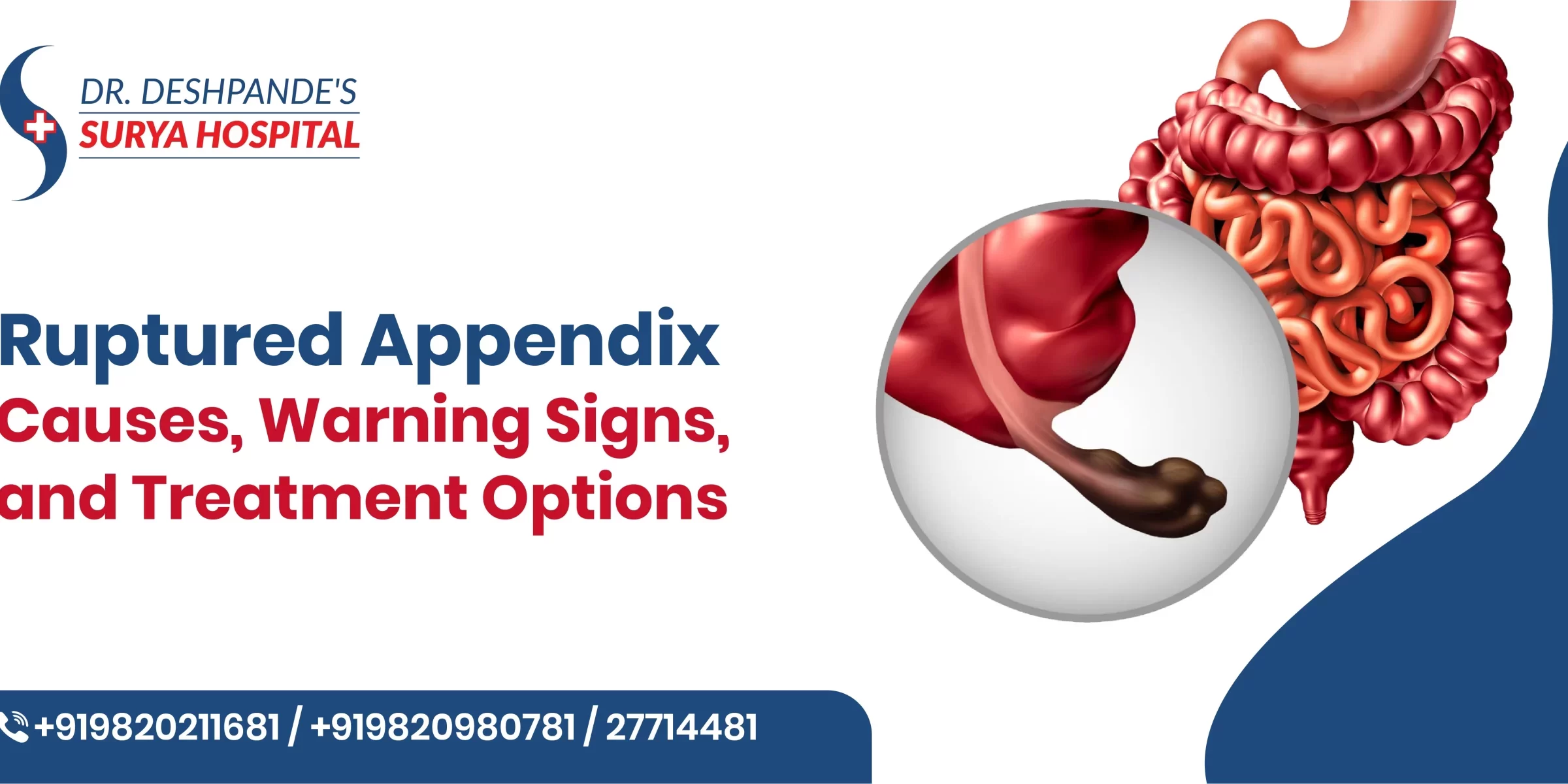
Appendicitis, an infection and inflammation of the finger-shaped appendix in the lower right side of your belly, is a medical emergency. If you don’t get immediate appendix treatment in Navi Mumbai, this small organ could burst, and the infection might spread throughout your abdomen. The bacteria and fluid can further lead to serious infections, such as peritonitis.
What Causes a Ruptured Appendix?
The risk of appendix rupture rises after 36 hours of your symptoms showing. The longer the appendicitis remains undiagnosed and untreated, the higher the risk of it bursting. Hard stools, an active infection, or rarely a tumour can block your appendix.
The blockage can result in the bacteria multiplying quickly. This can lead to swelling, which might eventually burst the appendix. The risk of rupture increases drastically when the treatment is delayed, which is why it’s advised to see a general surgeon in Navi Mumbai as soon as the symptoms show up.
Signs of Ruptured Appendix
Symptoms of appendicitis often overlap with other medical issues, such as ovarian cysts and stomach infection. This explains delayed treatment in many cases. The hallmark sign of appendicitis is pain that starts near the belly button and is followed by vomiting. The pain might radiate to the lower abdomen. Here’s what else people experience:
- Pain initiating in the upper abdomen and radiating to the middle and lower right abdomen
- Pain worsens with certain physical movements, such as when you stand up, sit, walk, laugh, or cough.
- Abdominal bloating
- Nausea and vomiting
- Low appetite
These are the symptoms of appendicitis. The symptoms worsen when the pus or bacteria inside the appendix leak into the abdominal cavity. Confusingly, the symptoms might ease as the pressure from the appendix is relieved.
Here are some dangerous signs that warrant immediate medical attention.
- High-grade fever with chills
- Multiple episodes of vomiting
- Swollen abdomen that’s hard and tender to the touch
- Feeling dizzy
- Intense pain that makes it hard to stand up
Treatment Options
If you experience the above warning signs of a ruptured appendix, visit a general physician immediately. A ruptured appendix is a medical emergency and requires prompt treatment. The most commonly used treatment is surgical removal of the appendix, also called appendectomy.
They might clear fluid from the abdomen. You will be on antibiotics before and after surgery. If the abscess has formed, antibiotics will be used in conjunction with drainage. The doctor clears and drains the abscess before starting surgery.
Recovery from Ruptured Appendix
Recovery from an appendectomy due to a ruptured appendix depends on where and how much the infection spreads, or whether an abscess forms. You can expect a few days’ stay in the hospital. Recovery also depends on the surgical procedure. Open surgery involves a longer recovery compared to the laparoscopic appendix removal surgery.
Conclusion
A ruptured appendix is a life-threatening medical emergency. However, it’s possible to prevent it or recover fast if you act promptly. If you or someone close to you experiences the above symptoms, take them to a healthcare specialist immediately. The sooner it’s diagnosed, the better the prognosis is.