

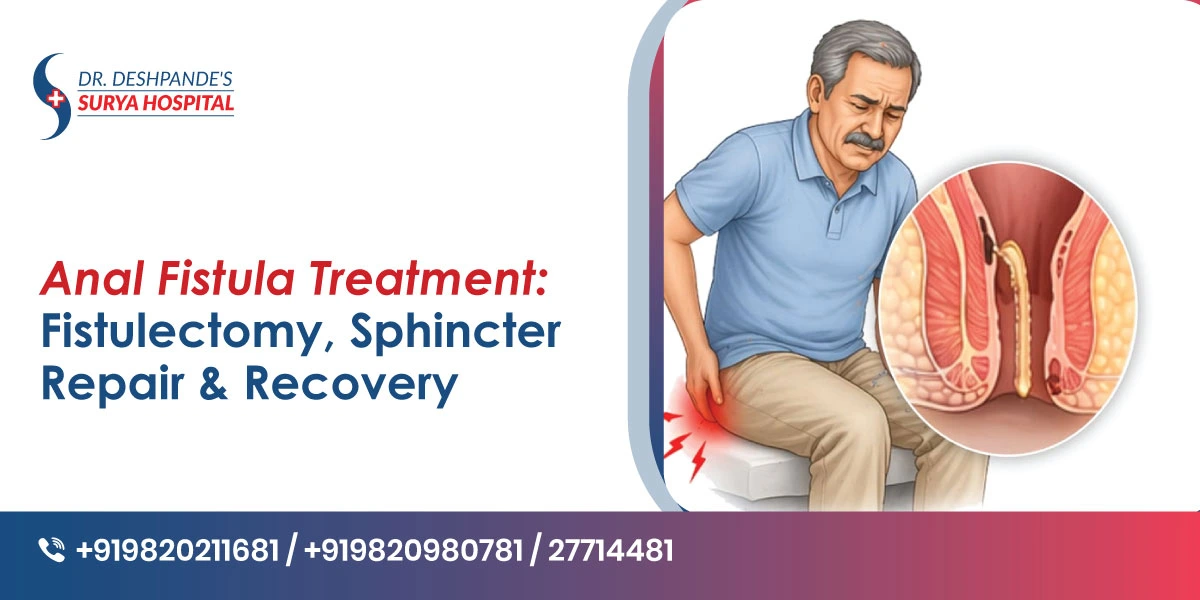
Anal fistula can be uncomfortable. It can cause swelling, infection, and tenderness around the pus drainage site. Fistulectomy along with sphincter repair is considered an effective fistula treatment in Navi Mumbai, especially if you have chronic infections that cause persistent pain, redness, drainage, and discomfort. This post explains fistulectomy with sphincter repair and the recovery plan.
What is an Anal Fistula?
It happens when you develop an infection in the anal glands. The infection can lead to an abscess, which fills with pus. The pus has nowhere to drain, so it pushes through the surrounding tissues and forms an abnormal tunnel, which opens in the skin around your anus.
This pathway is called a fistula. Once this tunnel has formed, it won’t usually disappear with medication or conservative treatments. It almost always needs to be closed or removed with a surgical treatment.
Anal Fistula and Sphincter Muscles
The anal canal has an anal sphincter, a ring of muscles that help control your bowel movements and gas. A fistula can pass through these muscles, making the treatment more complicated than it seems.
Simply removing the fistula isn’t the goal. Your surgeon has to carefully work around the sphincter muscles to ensure this abnormal pus drainage pathway closes while the function of the sphincter muscles is preserved.
Understanding Fistulectomy and Sphincter Repair
Fistulectomy is a surgery to remove the entire fistula tunnel. A general surgeon in Navi Mumbai may identify and track the fistula pathway and remove it entirely to allow the site to heal.
The biggest challenge, however, is the sphincter muscles. A simple fistula that doesn’t touch the sphincter muscles can be easily excised, but if it crosses the sphincter, the involved sphincter muscle is divided. This requires sphincter repair to preserve your bowel control.
Sphincter repair is crucial after fistulectomy, as it allows the continuity of your sphincter function. The exact method used for the repair depends on the patient’s anatomy, how much sphincter muscle is divided, and the patient’s current sphincter function.
Recovery After Fistulectomy
In the initial days of recovery, the surgical site might feel sore and swollen. Expect some drainage as well. Bowel movements can feel uncomfortable. However, these are all temporary side effects, which often disappear once the surgical site has healed completely.
Take your prescribed pain-relief medication and stool softeners to prevent constipation. Drink plenty of water and eat fiber-rich foods to prevent constipation-related straining during bowel movements. Complete healing may take several weeks. You may need regular follow-ups during the recovery period to ensure the wound heals properly and there are no signs of another infection.
Can Fistula Heal With Medicines?
No, medication may be used alongside the surgery to treat underlying bacterial infection, but it alone may not be enough to close the fistulous tract. The tract stays even when the infection clears, causing persistent discomfort and other symptoms. It’s important to find a qualified and skilled surgeon who can precisely cut the fistulous tract while repairing sphincter muscles.